We Use CookiesWe use cookies to enhance the security, performance, functionality and for analytical and promotional activities. By continuing to browse this site you are agreeing to our privacy policy

Best Recording Microphones

From leading brands and best sellers available on the web.
#1

Winner

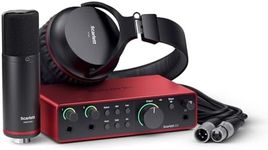
Focusrite Scarlett 2i2 Studio 4th G

Focusrite

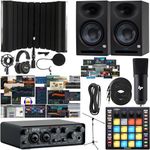
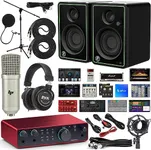
Focusrite Scarlett 2i2 Studio 4th Gen USB Audio Interface Bundle for the Songwriter with Condenser Microphone and Headphones for Recording, Streaming, and Podcasting

View on Amazon
#2
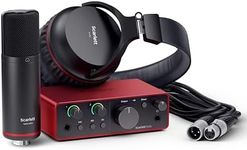
Focusrite Scarlett Solo Studio 4th

Focusrite

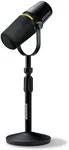
Focusrite Scarlett Solo Studio 4th Gen USB Audio Interface Bundle for the Songwriter, Guitarist or Vocalist with Condenser Microphone and Headphones for Recording, Songwriting, and Podcasting
View on Amazon
#3
Shure MV7+ Podcast Dynamic Micropho

Shure

editor-choice-ribbon

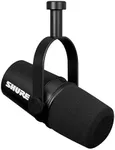
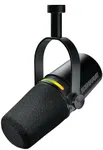
Shure MV7+ Podcast Dynamic Microphone with Stand – OBS Certified, Enhanced Audio, LED Panel, USB-C & XLR Outputs, Auto Level Mode, Digital Pop Filter – for Podcasting, Streaming, and Recording, Black
View on Amazon
#4
Shure MV7+ Dynamic Microphone – USB

Shure

editor-choice-ribbon

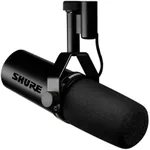
Shure MV7+ Dynamic Microphone – USB-C & XLR Podcast Mic for Streaming, Recording & Broadcasting, OBS Certified, Auto Level Mode, Digital Pop Filter, LED Panel, Black
View on Amazon
#5
Shure SM7dB Dynamic Studio Micropho

Shure

Shure SM7dB Dynamic Studio Microphone with Built-in Preamp – XLR Mic for Podcasting, Streaming & Vocal Recording, Wide Frequency Range, Smooth Warm Audio, Detachable Windscreen, Black

View on Amazon
#6
Shure SM7B Dynamic Studio Microphon

Shure

Shure SM7B Dynamic Studio Microphone - XLR Mic for Podcasting, Streaming, Vocal Recording & Broadcasting, Wide Frequency Range, Smooth Warm Audio, Detachable Windscreen, Black

View on Amazon
#7
Shure MV7X XLR Dynamic Microphone f

Shure

editor-choice-ribbon

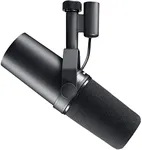
Shure MV7X XLR Dynamic Microphone for Podcasting, Streaming & Vocal Recording - Voice-Isolating Cardioid Mic with Broadcast-Style Design & All-Metal Construction, Black
View on Amazon
#8
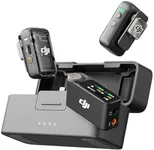
DJI Mic 2 (2 TX + 1 RX + Charging C

DJI

26%OFF

DJI Mic 2 (2 TX + 1 RX + Charging Case), All-in-one Wireless Microphone, Intelligent Noise Cancelling, 32-bit Float Internal Recording, 250m (820 ft.) Range, Microphone for iPhone, Android, Camera
View on Amazon
#9
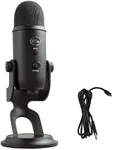
Logitech Creators Blue Yeti USB Mic

Logitech G

21%OFF

Logitech Creators Blue Yeti USB Microphone for PC, Mac, Gaming, Recording, Streaming, Podcasting, Studio and Computer Condenser Mic with Blue VO!CE effects, 4 Pickup Patterns, Plug and Play - Blackout

View on Amazon
#10
Shure MV6 USB Gaming Microphone for

Shure

editor-choice-ribbon

Shure MV6 USB Gaming Microphone for Streaming, Podcasting & Recording - Dynamic USB-C Mic with Voice Isolation, Auto Level Mode, DSP Audio Control & Headphone Monitoring, Black

View on Amazon
How do we rank products for you?

Our technology thoroughly searches through the online shopping world, reviewing hundreds of sites. We then process and analyze this information, updating in real-time to bring you the latest top-rated products. This way, you always get the best and most current options available.

headphones-stars

Most Popular Categories Right Now

Buying Guide for the Best Recording Microphones

Choosing the right recording microphone can significantly impact the quality of your recordings, whether you're a musician, podcaster, or content creator. The key to finding the best microphone for your needs is understanding the different specifications and how they align with your specific use case. Here are some essential specs to consider when selecting a recording microphone.
TypeMicrophones come in various types, including dynamic, condenser, and ribbon. Dynamic microphones are durable and handle high sound pressure levels, making them ideal for live performances and loud sound sources like drums. Condenser microphones are more sensitive and provide a broader frequency response, which is great for studio recordings of vocals and acoustic instruments. Ribbon microphones offer a warm, vintage sound and are often used for specific studio applications. Choose the type based on your recording environment and the sound source.
Polar PatternThe polar pattern of a microphone describes how it picks up sound from different directions. Common patterns include cardioid, omnidirectional, and bidirectional. Cardioid microphones capture sound primarily from the front, reducing background noise, making them suitable for vocals and solo instruments. Omnidirectional microphones pick up sound equally from all directions, which is useful for capturing room ambiance or group recordings. Bidirectional microphones capture sound from the front and back, ideal for interviews or duet recordings. Select a polar pattern that matches your recording setup and desired sound isolation.
Frequency ResponseFrequency response refers to the range of frequencies a microphone can capture. A flat frequency response means the microphone captures all frequencies equally, which is ideal for accurate sound reproduction. Some microphones have tailored frequency responses that enhance certain frequencies, such as boosting the mid-range for vocals. Consider the type of sound you want to capture and whether you need a microphone that accurately reproduces the source or one that adds character to the recording.
SensitivitySensitivity measures how effectively a microphone converts sound into an electrical signal. High-sensitivity microphones capture quieter sounds and are suitable for studio environments where subtle details are important. Low-sensitivity microphones are better for loud sound sources and live performances. Think about the volume of the sound source and the recording environment when choosing the sensitivity level.
ImpedanceImpedance is the resistance a microphone offers to the flow of electrical current. Low-impedance microphones (less than 600 ohms) are generally preferred for professional audio applications because they maintain signal quality over long cable runs. High-impedance microphones (greater than 1,000 ohms) are more suited for consumer-grade equipment and shorter cable runs. Match the microphone's impedance with your recording equipment to ensure optimal performance.
Self-NoiseSelf-noise is the inherent noise a microphone produces when no sound is being captured. Lower self-noise levels are crucial for recording quiet sources or in studio environments where clarity is paramount. If you're recording in a controlled environment and need pristine audio quality, opt for a microphone with low self-noise. For louder environments or less critical applications, higher self-noise levels may be acceptable.